

Table of contents
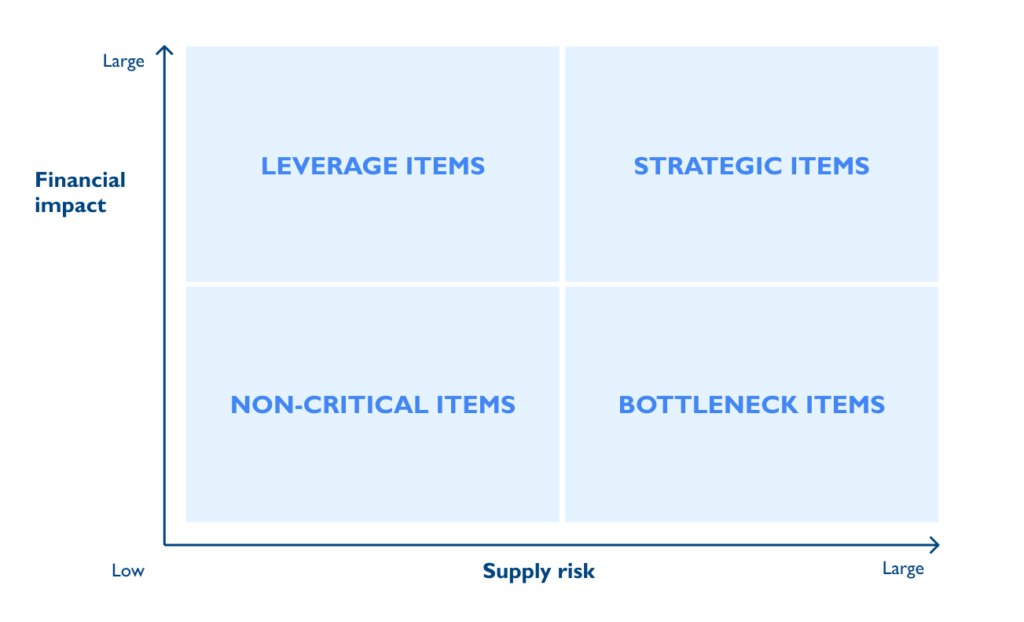
It is important to emphasize that strategic sourcing as described here is primarily applied to strategic categories and suppliers (see the Kraljic Matrix).
Strategic sourcing involves creating a (category) plan, building strong relationships with key people within suppliers, creating strong interactions/interfaces with these suppliers and actively managing the relationship.
The (category) plan is based on data analysis (market analysis, existing contracts, purchasing volumes, prices, delivery and quality performance, interviews with internal stakeholders, etc.), and is based on a thorough analysis of the market.
FREE WHITE PAPER
Reduce Total Cost of Ownership (TCO) with the Kraljic Matrix
The key foundations of strategic sourcing are:
- A deliberate category policy (one or more suppliers, etc.).
ability to build strong and long-term relationships with suppliers based on personal relationships at different organizational levels - Good contracts
- KPIs
And the main benefits are:
- Lower QLTC (Quality, Logistics, Technology, Cost) or TCO (Total Cost of Ownership) costs.
- Working closely with a limited number of suppliers, each supplier gets more volume during the contract period and can therefore offer better prices and terms
- Better quality: having these suppliers audited by a QA ensures that all processes are in place to ensure high delivery reliability and quality.
- Less risk: for example, if a supplier experiences a failure, a good relationship makes it likely that they will help find a solution.
Free whitepaper
Project Procurement in the Machine Building Sector
So, how do you create lasting relationships with suppliers?
- Invest in the relationship at different organizational levels
- Negotiate a clear agreement in which all interfaces between the organizations are well described and with clear KPIs for the supplier against which its performance can be properly measured.
- And regularly (annually?) renegotiate relevant parts of the contract, e.g., to improve collaboration/interfacing, find areas to enhance collaboration, etc.
- Managing the relationship well by measuring performance, communicating that performance periodically and diving deeper if it falls short
- Helping suppliers improve their processes, products and services, such as through audits to help them grow and become more competitive.
Find a buyer through xentys
At xentys, your experienced procurement recruitment agency, we are happy to help you find the right professional for your procurement team. Send a message today and strengthen your purchasing department.
Conclusion
Strategic sourcing is about building strong, long-term relationships with strategic suppliers and provides a number of benefits. It’s about working with them, investing in their development and making success a logical outcome of collaboration.
News

How to Successfully Negotiate as a Buyer in 2026
In the past, negotiation within procurement mainly revolved around securing the lowest possible price. That was certainly the case when I was a young buyer some 30 years ago. Since then, negotiation has become far more complex – like so many other things. Today, procurement is a strategic business function.

Supplier risk intelligence: why supplier risk management is more important than ever
The impact of geopolitical tensions, trade tariffs, sanctions, cyber threats, and supply chain disruptions A changing reality for procurement The environment in which procurement operates has fundamentally changed. Supply chains have become more international, more complex, and more dependent on a limited number of critical suppliers and regions. At the

The Hidden Costs of a Procurement Talent Shortage
How Understaffed Procurement Teams Lead to Burnout, Increased Operational Risks, and Reduced Strategic Impact A Growing Problem with an Underestimated Impact In many organizations, procurement is under increasing pressure. Supply chains have become more volatile, dependency on suppliers are growing, and business expectations are shifting toward speed, flexibility, and strategic

The growing risk gap in procurement
Today, managing business risk is essential in the procurement industry. While for many years focus lied on cost control, contract management and early involvement in projects, the landscape has shifted significantly. Geopolitical tensions, disruptions in international supply chains, price volatility, and stricter regulations mean that organizations are facing more uncertainty